Thursday, February 26, 2009

New Kitchen Toys and Pizza!!

I was the lucky recipient of several new kitchen toys for my birthday this year.
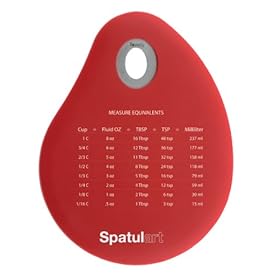
My parents got me a Tovolo Spatulart flexible spatula, which should be great for gently lifting bread out of bowls or folding it over while it rises. I have a stiff dough scraper that's incredibly handy, but this one can bend itself to the curve of a bowl. Super cool!

They also sent me a new oven thermometer that measures accurately in the 50-100 degree range, which I really needed for controlling bread rises etc.

And! the fun just doesn't stop, a new kitchen timer (because I'm awful at remembering to set the timer on the microwave).

Marge and Lauren were also super heroes and gave me a cast iron skillet and a pizza stone respectively. I'm thanking them by giving the pizza stone a whirl tonight and cooking up two (hopefully) super tasty pizzas.

Toppings for pizza 1: roasted garlic, olive oil, roasted red peppers, shallots, blue cheese

Toppings for pizza 2: red sauce (organic italian herb), kalamata olives, mushrooms, baby spinach (maybe?), and fresh mozzarella

I can't decide which pizza I want to put the spinach on... We'll see! Both pizzas are (of course) on sourdough crusts that are partially whole wheat. Pizza shells are by far my favorite way to utilize extra sourdough starter. I'll let everyone know how the kitchen gadgets and the pizza stone work out and maybe take some pictures of the pizzas.

Candace and Meg were also wonderful and (separately, because they both brilliantly knew I loved chocolate) gave me an amazing box of chocolates and a chocolate bar that I'll save for a separate post!

pizza!

A bunch of folks came over for pizza one night so that I could try out my new pizza stone (thanks Lauren!!). I made the usual sourdough whole wheat crust (which always seems a little dense for me, but I haven’t yet played with the recipe).

We made two pizzas, each one with different toppings on each half. The first had a slightly spicy red sauce with mushrooms, olives, onions, spinach, and fresh mozzarella on one half and red sauce, onions, spinach, mozzarella and parmesan cheese on the other.The second had an olive oil and garlic “sauce”, shallots, mushrooms, roasted red peppers, garlic, parmesan and blue cheese on one half and the same on the other side with the addition of spinach and olives.

Both pizzas were delicious! But I discovered a little late in the process that I needed something to function as a pizza peel to get the pizzas in and out of the oven. I ended up using an upside down cutting board, which worked okay. My friend Candace (who is an amazing cook) has had success using just a piece of cardboard, so I may try that next time. The pizza stone definitely made the crusts crispier and kept the oven hotter. I’m excited about using it more in the future.

Monday, February 9, 2009

Mustard

I really suck at updating this blog. I’d like to pretend that it’s because I’m too busy doing exciting things in real life, but that’s really not the case. I’m going to try to play catch up with a couple of posts here and then we’ll see if I can commit to updating once a week.

In January I was rifling through my spice cabinet and wondered if I was ever going to finish the giant bag of mustard seeds I bought for making Indian food. A couple of days later I was flipping through Savour magazine (my mom got me a subscription… but it’s unfortunately mostly geared toward meat eaters) and happened upon a recipe for Spicy Guinness Mustard. Convenient? I thought so. I didn’t actually have any Guinness, but we did have a keg of BBC Coffeehouse Porter in the fridge, so I thought I would just swap out the beer. Otherwise, I followed the recipe exactly. It was waaaay too spicy, both in terms of heat (and I like hot mustards) and in terms of the dominating flavor of the cinnamon, cloves, nutmeg and allspice. It also made a great deal more mustard than I had anticipated. So, I decided to experiment and add different things to the mustard to change the flavor, mostly just sweeteners. The results, according to my roommates and coworkers, were much improved. The mustard’s all gone now and they keep asking me to make more. I think I’m going to try champagne shallot mustard next. Anyway, here’s what I ended up with:

Spicy Guinness Mustard Take 2 (and 3 and 4)

12-oz. BBC Coffeehouse Porter
1 1⁄2 cups brown mustard seeds (10 oz.)
1 cup red wine vinegar
1 tbsp. kosher salt
1 tsp. freshly ground black pepper
1⁄4 tsp. ground cinnamon
1⁄4 tsp. ground cloves
1⁄4 tsp. ground nutmeg
1⁄4 tsp. ground allspice

Divide 3 ways.

To the first batch I added 3 cloves of garlic (minced and blended with the rest of the mustard) and 1-2 T of really sweet balsamic vinegar (I don’t remember how much, I just did it to taste). This one was by far the favorite of the three.

To the second batch I added molasses (1-2 T), brown sugar (1 T) and some cinnamon

To the third I added honey (1-2 T) and apple cider vinegar (1-2 T). This was the second favorite I think.

Pictures!


The ingredients assembled. It was actually way easier than I thought it would be.


Mixing everything together.


How it looks from the side.


You can see how much of the liquid the mustard seeds absorbed. I unfortunately didn't take any pictures of the finished product.


The end!


Sunday, February 1, 2009

Polenta

Perhaps surprisingly, I first had polenta in a college dining hall, which is definitely not the best place to try a new food. I might have eaten it when I was younger but I don’t really remember. Usually if we ate corn meal based things at home, my mom would slice the dough into rounds and fry it for breakfast, which made it much crispier than the polenta I later had in college. In the dining hall it was almost always topped with a black bean sauce and was actually one of the better things I’ve eaten at Smith. Prior to the consolidating dining/themed dining halls shift, vegetarian fare was often less than appealing. One of the few good things I can say about the many changes that have occurred at Smith in the past few years is that there is a great deal more vegetarian food available now than there was before.


Fast forward to now. I had a bunch of cornmeal sitting around the kitchen because I use it when I bake bread or make pizza, but that was about it. Then I was reading a food magazine and came across a recipe for creamy polenta. The creamy part didn’t appeal to me. I wanted something less like grits or cream of wheat and more like a patty, so I looked up some other recipes.


In the end I didn’t follow any one particular recipe, I just sort of put whatever I wanted in it, but it turned out well I think. All of the recipes called for what I thought was a huge amount of cornmeal (3+cups) and even after cutting back it still made more than I expected. I think I used a cup and a half of cornmeal, maybe 2 cups, not sure. I warmed a little bit of water in a pan on the stove and whisked the cornmeal into it. After it came to a simmer I stirred in some tomato sauce, garlic salt, and Italian seasoning. I brought it back to a simmer until the cornmeal was soft.

Next I spread it on a cookie sheet lined with wax paper. It was really thick and a little tricky to spread. Then it went into the fridge to solidify while I sautéed some garlic, onions, spinach, beans, and crushed tomatoes.

When the polenta had cooled I flipped it out onto a cutting board, sliced it up, and topped it with the veggie tomato sauté. I thought it was really delicious but my roommates weren’t so keen. It did look a little weird and to be honest the texture is kind of strange at first. It does well if you fry it after slicing it or bake it in the oven with a sauce on top. I ended up eating almost all of the polenta myself over the course of a week. I was a little tired of it at the end, but it wasn’t too bad. The polenta turned out to be incredibly versatile. I put an alfredo sauce on it once, more plain tomato sauce another time, and I tried my hand at a spicy black bean sauce that was reminiscent of (but hopefully much better than!) the one I first had at Smith.

All in all I think polenta’s definitely something I’ll try again but perhaps in a much smaller batch.

Wednesday, January 14, 2009

Survey

Is this white font on a dark blue background difficult to read? Should I change it? Does anyone actually read this but me?

:D

Saturday, January 10, 2009

Sourdough and yay 2009!


I celebrated this new year by baking bread, a whole lot of it. Last year for new years, one of my goals was to learn to bake bread, specifically sourdough. Toward that end, I began researching sourdough on January 1st, 2008 and mixed up my first sourdough starter on January 4th, 2008. It took a couple of weeks for it to get going and do its yeasty thing, but by mid January I was baking my first loaves of sourdough bread. A year of mostly frequent (but often infrequent) regular feedings later, along with the help of roommates while I was away in June, my sourdough is still alive and kicking and one year old!

I have mostly fed my sourdough with AP flour, usually King Arthur, because that's what I have on hand. I occasionally fed it with whole wheat flour, particularly when I wanted to give it a boost before baking or if I wanted to incorporate some whole wheat into a bread that didn't call for it in the recipe. I have also used rye flour recently, but more on that later.

I usually keep one jar or container of starter in the fridge as a reserve, that consists of just flour and water (and natural yeast of course). In addition, I'll often have another container of starter in the kitchen at room temperature that I'm building up for whatever kind of bread I'm next making. I'll also have separate containers for any other kind of stuff that I might want to add to the starter beyond just flour and water.

On the non-wheat front, I've added a few other things to the starter at various points to see how they would alter the resulting loaves. I have added potatoes (sliced thin) and potato water, I have added whey (leftover from making cheese), milk, sugar (never in a starter that I've kept), malted barley, and I think I'm going to try adding beer to one this week.

I sometimes try to let the water I use to feed the starter sit out so that the chlorine can evaporate and it can come to room temperature etc, but mostly I just use lukewarm tap water from the kitchen faucet. I know that there are sourdough purists out there who use only filtered spring water and stone ground organic wheat to feed their starters, but I don't really have the time, energy or money for that and my starter doesn't seem to be any worse for the wear because of it.

I also don't really regulate the water to flour proportions I use when feeding my starter. Many of the "authoritative" websites and books I've read obsessively monitor the different water to flour ratios they use to feed their starters and any effects each has on the bread. I honestly don't often measure when feeding my starter. There, I said it. I usually shoot for roughly equal parts flour and water (for a 100% hydrated starter), but that varies give or take a quarter cup in either direction.

The new reformed 2009 joe however, is trying to be much more scientific (read: anal) about his sourdough starter. I have been keeping track of the performance of my starter (how much it rises in a given time and at what temperature etc) as well as its hydration level. I started to do this for two reasons, the first being that the past year has had a great deal of ups and downs as far as my sourdough breads have been concerned and now that I've had my fun getting to know sourdough and playing with different things, I'd like to move toward establishing more control and regularity, so that I can consistently turn out good loaves of bread. The second reason is that I decided to celebrate the new year by attacking a set of recipes that specify certain hydration levels for starters as well as particular methods for activating and building up one's starter prior to actually using it in the recipe. They were all sourdough rye recipes, but I'm going to use a separate post to talk about those.

All in all, 2008 was a great year in which I baked dozens and dozens of loaves of bread, many of which were sourdough, a few of which turned out really well, and several of which were complete disasters. I was thinking of declaring 2009 the year in which I tackled some other baked good, both scones and muffins were in the running, but I haven't decided yet. For now, January has been a month of pushing my bread skills to the next level and actually taking the time to research and plan before baking and then learn something from the results of each loaf I make, as opposed to my the hell with it I never really measure baking is just for fun approach in 2008. So far, so good!
Sunday, January 4, 2009

12 Beers of Christmas Wrap-Up

Okay so I dropped the ball and didn't keep updating with reviews of the rest of the beers I tried over the holidays. I took notes on some of them if I was at home and bored, which I'll copy down here for the few I've missed, hopefully wrapping up the beer-themed posts.

Also, in beer news, Marge got our house a keg for Christmas! She's so thoughtful. So we now have the Berkshire Brewing Company's Coffeehouse Porter on tap. It's one of my all-time favorite beers and we had a pony keg of it last winter that went quickly. Having it on tap again is truly the gift that keeps on giving, for at least the next two weeks :D

12 Beers of Christmas

1. Thirsty Dog Brewing Company's Old Leghumper

2. Founders Breakfast Stout

3. Bell's Special Double Cream Stout

4. Columbus Brewing Company 1859 Porter

5. Moylan's Kilt Lifter Scotch Ale

6. Murphy’s Draught Style Stout

  • In a can with a widget for $1.80. I don’t know the official way to pour canned stouts with widgets, but I upended the whole thing into a pint glass and lifted it slowly out. It had a thick, cream tan head that stayed until I finished the beer. It had a very strong yeasty aroma and I could really smell the alcohol. The taste was surprisingly sweet and honeyed given the smell with sort of an oily mouthfeel that kind of coated and lingered on my tongue. Not entirely pleasant. It has a smooth, yeasty/bready taste and no hint of hops. A decent enough beer but probably wouldn’t get it again.

7. Bell’s Amber Ale

  • In a bottle ~$2. Poured a golden honey color with a thin head that left white lacing. It had a sweet, malty aroma with a hint of floral hops. Light mouthfeel, medium to high carbonation with a slightly bready aftertaste. It was a good, refreshing beer with a slight bitterniss of hops on the tip of the tongue balanced by an overall sweetness and lingering grainy taste. Very drinkable. I’m a definite fan of Bell’s.

8. Shiner Boch

  • Ew. I tried it because my dad brought it home. He had tried it because a coworker ordered it while they were on a business trip in Texas. It wasn’t any good.

9. Great Lakes Brewing Co. Edmund Fitzgerald Porter

  • I had this beer several times while I was home. My dad bought me a six pack and I had it on tap at the Vegiterranean http://www.thevegiterranean.com/, a vegan restaurant Chrissie Hynde from the Pretenders opened in Akron, Ohio. (I should update about this lunch/place sometime). I’ve had a few of the GLB Co’s beers in the past couple of years and this is by far my favorite. I never took formal tasting notes, but this beer was consistently good.

aaaand! then i never finished this post. the holidays happened and then there was some traveling, and now i'm back in northampton and have moved on to other things, namely bread. so, the beer reviews will give way to some bread reviews for a while. hopefully completed posts.